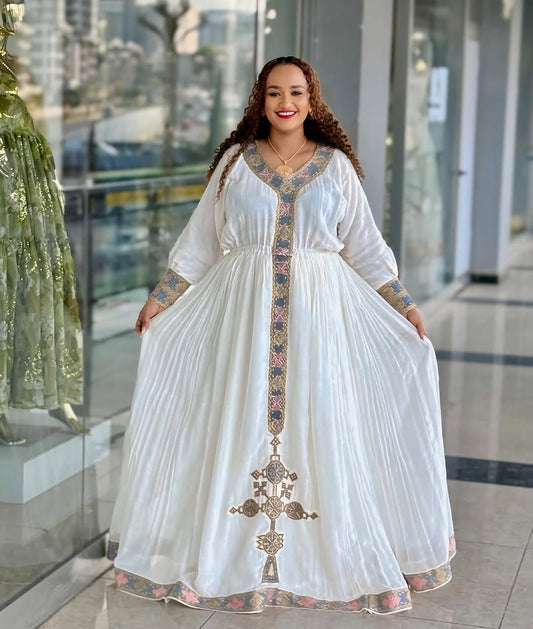

How to Wash Habesha Kemis: Safely Clean Your Hand Embroidery
Your Habesha kemis is a cultural treasure with delicate hand embroidery that can be ruined by one wrong wash, hot water fades vibrant colors, harsh detergents weaken threads, and machine agitation snags intricate tibeb designs. The solution is straightforward: hand-wash in cold water with gentle soap, protect the embroidery by turning the dress inside out, and lay flat to dry. This guide walks you through the exact steps used by Ethiopian and Eritrean families for generations, plus when to choose professional dry cleaning, so your kemis stays beautiful for years.
Step 1: Identify What Your Kemis Is Made Of
First, determine the fabric type. A traditional kemis is usually handwoven cotton, which you can wash at home. Modern or formal versions might be chiffon, georgette, or have sections of silk and satin.
- Cotton: Safe for hand-washing.
- Chiffon or Georgette (especially with metallic threads): Be extra careful. Hand-wash only.
- Silk, Satin, or Heavily Embroidered: Do not wash these at home. Take them to a professional dry cleaner.
If you are unsure of the fabric, treat it as delicate and stick to hand-washing or dry cleaning.
Step 2: Get Your Hand-Wash Station Ready
You only need a clean sink or basin.
- Fill it with cold or lukewarm water. Never use hot water. Hot water is the primary cause of shrinking and makes embroidery dyes bleed.
- Add a mild detergent. Use about one US tablespoon (approximately 15 mL) of a gentle, natural soap. Avoid standard laundry detergents, bleach, and fabric softeners. These are too aggressive and will damage the fabric and threads. A common option mentioned for baby laundry is Ivory Snow Stage 1.
Step 3: Turn the Kemis Inside Out
Before it touches the water, turn the entire dress inside out. This protects the delicate hand embroidery (tibeb or telf) from friction and snagging during the wash. It also helps prevent the embroidery's dye from bleeding onto the main dress.
Step 4: Submerge and Let It Soak
Place the inside-out kemis into the soapy water. Gently press it down until it is fully submerged. Let it soak quietly for a short period, just enough to loosen soil.
- Do not rub, scrub, or twist the fabric.
- If you must move it, slowly swirl the water with your hands. The goal is to let the soap and water work without rough handling.
Step 5: Rinse Out the Soap with Cold Water
After soaking, lift the kemis from the basin. Do not wring it out. Drain the soapy water and refill the basin with clean, cold water.
Submerge the dress again and gently press it to work the soap out. Repeat this rinse process two to five times. Continue until the water runs clear and you see no more soap suds.
Step 6: Press Out Excess Water, Don't Wring It
Twisting or wringing a wet kemis will stretch it out of shape and break delicate fibers. Here is a better way:
- Lay a large, clean, dry towel flat on the floor or a table.
- Place your wet kemis on top of the towel.
- Roll the towel and the kemis together firmly.
- Press down along the rolled towel. This squeezes excess water out of the dress and into the towel.
- Unroll it. If the kemis is still very wet, repeat the process with a second dry towel.
Step 7: Lay It Flat to Air-Dry
Never hang a wet kemis by the shoulders. The weight of the water will stretch the fabric and leave permanent bumps from the hanger.
- Spread the damp kemis flat on a clean, dry towel or a mesh drying rack.
- Keep it in a shaded, well-ventilated room, away from direct sunlight.
- If the room is humid, place a fan nearby to improve air circulation.
- It can take 24 to 48 hours to dry completely. Be patient.
Step 8: Iron on the Reverse Side While Still Damp
To get a crisp finish without damaging the embroidery, iron your kemis before it is completely dry.
- Keep the kemis turned inside out.
- Place a soft towel on your ironing board to cushion the embroidery.
- Set your iron to a low or medium-heat setting, specifically 110–150 °C (230–300 °F). (Use the "cotton" setting for a cotton kemis).
- Press and lift the iron. Do not slide it back and forth over the embroidery.
- For extra protection, place a thin cotton cloth (like a pillowcase) over the embroidered areas and press through it.
- If the kemis is already fully dry, use a spray bottle with distilled water to dampen it. Turn off the steam function on your iron if the fabric is already damp, aiming for it to be slightly damp, not soaking wet.
Should You Ever Machine-Wash a Habesha Kemis?

The short answer is no. Traditional care guidelines and fabric experts advise against it. A washing machine's spinning and tumbling is too aggressive for delicate handwoven fabric and embroidery.
Risks of machine washing:
- Shrinkage: Hot or even warm water can shrink the cotton.
- Color Fading: The machine's agitation can strip color from the fabric and embroidery.
- Embroidery Damage: Threads can snag, fray, or pull loose, especially metallic telf.
- Texture Damage: The fabric can become rough and permanently wrinkled.
If you absolutely must use a machine for a 100% cotton kemis (no silk or metallic threads), you are doing so at your own risk. Here is the least damaging way to attempt it:
- Turn the kemis inside out.
- Place it in a mesh laundry bag.
- Select the delicate or hand-wash cycle.
- Use cold water only.
- Use a small amount of mild detergent.
- Skip the spin cycle or set it to the lowest possible speed, which is often 400-600 RPM on typical washing machines. Some machines also offer a "drain only" option.
- Remove it immediately and lay it flat to dry.
Understand that even with these precautions, you shorten the life of your garment.
|
Feature |
Hand-Washing |
Machine-Washing (Risky) |
|
Color |
Kept vibrant and rich |
Fades much faster over time |
|
Texture |
Stays soft and breathable |
Can become rough and wrinkled |
|
Embroidery |
Stays intact and secure |
High risk of snagging and fraying |
|
Longevity |
Lasts for years, even generations |
Can degrade quickly with repeated cycles |
Common Mistakes That Ruin Your Habesha Kemis
Avoid these errors at all costs. One mistake can cause permanent damage.
- Using hot water: It will shrink your dress and make the colors run.
- Using harsh detergents or bleach: These weaken the threads and cause discoloration.
- Wringing or twisting the fabric: This breaks the fibers and ruins the dress's shape.
- Hanging it to dry by the shoulders: This creates permanent hanger marks and stretches the neckline.
- Scrubbing the embroidery: This pulls the threads and creates fuzzy, damaged patches.
- Putting it in the dryer: The heat will shrink it and destroy the embroidery.
When to Go to a Professional Dry Cleaner
Some kemis should never be washed at home. Take your garment to a professional if it meets any of these criteria:
- It's made of silk or satin. Water will damage these fabrics.
- It has heavy, dense embroidery. Formal kemis with intricate patterns are best left to experts.
- It has metallic telf threads, beading, or sequins.
- It's a mix of different fabrics.
When you go, find a cleaner experienced with delicate cultural garments. Be sure to point out the embroidered areas.
Storing Your Kemis to Keep it Perfect
How you store your dress is just as important as how you wash it.
- Fold the kemis neatly and place it in a breathable cotton garment bag.
- Alternatively, wrap it in acid-free tissue paper.
- If you must hang it, use a wide, padded hanger to distribute the weight and prevent shoulder marks.
- Store it away from direct sunlight, which causes fading.
- Never use plastic bags. They trap moisture and can cause the fabric to turn yellow over time.
FAQs
1- Can I wash a lehenga in the washing machine?
No. A lehenga, like a heavily embroidered kemis, has delicate work, beading, and often uses fabrics like silk or brocade. It is not designed for machine washing. Always take a lehenga to a professional dry cleaner who specializes in formal Indian wear.
2- How do you wash an Ethiopian gabi?
A gabi is a traditional handwoven cotton blanket. Most gabis are durable and can be machine-washed. Use a gentle cycle with cold water and a mild detergent. To maintain its softness, you can air-dry it or tumble dry on a low heat setting. Always check if there are specific care instructions.
3- What fabrics should not be machine washed?
As a general rule, you should avoid machine washing delicate and structured fabrics. This includes:
- Silk
- Satin
- Velvet
- Lace
- Anything with heavy beading, sequins, or intricate embroidery.
- Tailored items like blazers or structured coats.
4- Can I wash 100% silk in a washing machine?
It is highly discouraged. While some modern silk garments are labeled "machine washable," it is a risky process. If you must, use a mesh bag on a "delicates" cycle with cold water and a silk-specific detergent. However, for a valuable silk item like a kemis, professional dry cleaning is always the safest and recommended method to preserve its luster and structure. Hand-washing is a less safe alternative that can still lead to water spots or loss of shine.