
Handwoven vs Machine-Made Habesha Dresses: Quality, Tradition, and What You Need to Know
Habesha dresses, also referred to as kemis, are an important part of Ethiopian and Eritrean heritage. The traditional attire, which is worn at important cultural events, including weddings, religious events like Meskel, as well as national festivities, is more than apparel; it is identity and heritage. As the international demand for Habesha dresses increases, so too does the discussion of handwoven vs machine-made Habesha dresses.
This blog discusses the differences between these two categories of dresses from various aspects: craftsmanship, fabric quality, cultural value, and consumer perspectives. Whether you are a consumer looking to make an open-minded purchase or an enthusiast of tradition, gaining insights on the differences between handwoven and machine-stitched Habesha dresses is important.
Overview of Habesha Dresses
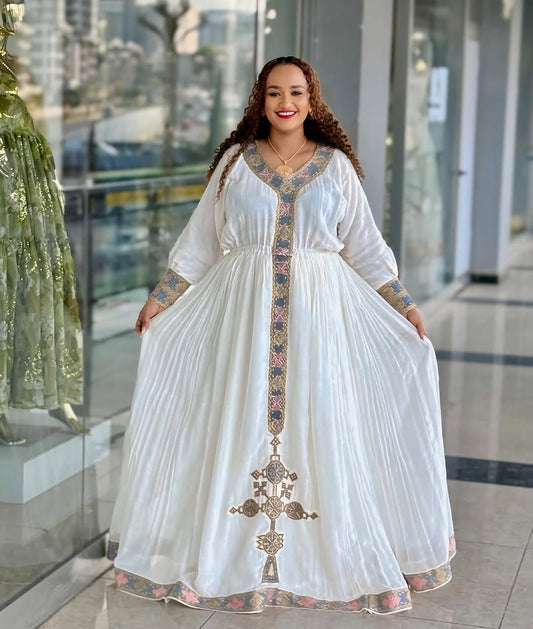
The Habesha dress, or kemis, is an Ethiopian and Eritrean garment of traditional dress. They are usually made of cotton and typically white or off-white in colour, with elaborate coloured bordering known as tilet in Eritrea or netela border in Ethiopia. The design and ornamentation can differ depending on the districts, with varying regional customs and practices.
The dresses are worn to significant cultural events; from the vibrant Meskel festival to weddings in Ethiopia and Eritrea, and function both as cultural dress for daily life as well as formal dress for special occasions. The dress fabric is key, and this is where the handwoven versus machine-made distinction becomes paramount.
The Handwoven Habesha Kemis
Traditional handwoven Habesha dresses are fashioned with generations-old handloom weaving techniques. It is an arduous process that calls for skilled craftsmen to work with wooden or metal looms by hand, interweaving threads with meticulous care to create fabric with unique textures and variations.
The work involved in handwoven dresses is significant. It can take days or weeks per piece of fabric, depending on size and complexity. The time-consuming, manual process produces a distinctive texture, enhanced thread count, and improved breathability, virtues highly valued in the warm climates of the Horn of Africa.

The handwoven fabric is also highly praised for its durability. The natural fibres and weaving process create a fabric that gets progressively softer and more comfy over time, but is still robust and resilient. These dresses are imbued with deep cultural significance: to wear and to own handwoven Habesha dresses is to pay homage to Ethiopian and Eritrean heritage, to the support of local craftspeople and the retention of those established weaving centres famous for their unique styles.
Machine-Made Habesha Dress
Machine-made Habesha dresses are manufactured using power looms or automatic textile machines, which allow mass production with faster turnovers. It not only saves cost but also boosts availability, as machine-made dresses become the go-to for daily use and cost-conscious consumers.
Yet, machine weaving compromises some of the handmade imperfections present in handwoven fabric. Machine fabric is more uniform in texture and pattern but fails to reproduce the slight imperfections that signify handmade fineness. The material can also not breathe as well and is not as durable in the long term, with a propensity to wear and tear more quickly.

In spite of these restrictions, machine-made Habesha dresses also have their niche. They offer affordable, readily available versions of the dress for those who wish to enjoy the aspects of the dress without the luxury price tag or wait for the handwoven versions. Furthermore, they suit contemporary lifestyles wherein convenience and price sensibilities are important.
Quality Comparison: Handwoven vs Machine-Made Habesha Dresses
In terms of quality, handwoven and machine-made Habesha dresses differ significantly:
- Feel and Texture: Handwoven fabric has an irregular texture and will feel soft and breathable, while machine fabric feels smoother but not as breathable.
- Longevity: Handwoven garments usually look better with age and wear, while machine-made garments may fall apart sooner, looking worn sooner.
- Design Detail: The detailed patterns and designs of hand-woven fabric generally have more depth and character, with machine-made dresses replicating these with lesser accuracy.
- Material: Better material and workmanship mean handwoven garments last longer and look better over time.
This discussion refrains from generic flattery. It rather states categorically that handwoven Habesha dresses make their usually higher cost acceptable in terms of quality and cultural significance, whereas machine-made dresses provide convenience and accessibility.

The Cultural Importance of Handwoven Habesha Dresses
The handwoven Habesha dresses are part of the deep-rooted culture of Eritrea and Ethiopia. They are not only clothes but also identity symbols, works of craftsmanship, and community pride. To wear a handwoven Habesha kemis during the Meskel Festival or on a day of national celebration is to connect with one’s heritage and express respect for age-old craftsmanship traditions.
The weaving craft is a family-inherited legacy shared among entire communities, each of whom contributes a distinct style to create a collective heritage. Handwoven kemis thus stands as a living reminder of the ingenuity and strength of Ethiopian and Eritrean traditions.
In contrast to this, commercially made dresses, though functional, are not so immediately rooted in tradition and tend to be perceived as commercial substitutes. Appreciating this cultural significance is key to realising why handwoven dresses mean more than sheer appearance or cost.
How to Identify Authentic Habesha Dresses
For buyers keen to invest in authentic handwoven Habesha dresses, several indicators can help:
- Fabric texture: Real handwoven fabric has slight irregularities or subtle differences in the tightness of the threads, an indication of hand weaving. Machine fabric is uniform in texture.
- Stitching and Design: Observe intricate, detailed borders with minor irregularities that betray hand-stitching over mechanical accuracy.
- The risk of spurious goods is eliminated to the extent possible by buying from authentic dealers or weaving centres renowned for indigenous crafts.
- Price Point: Price in itself is not a sure sign of anything, but strikingly low prices for so-called handwoven dresses are a red flag.
- Feel and Weight: Handwoven fabric feels more robust and heavyweight compared to machine-stitched material.
Recognition of these aspects assists consumers in evading replicas and respecting the culture with respect to authentic work.
Buying Advice
Both the handwoven and machine-made Habesha dresses have their own advantages. Handwoven dress shines with craftsmanship, durability, and tradition, which make them suitable for occasions or for people who highly value heritage. Machine-made dress offers cost-effectiveness, convenience, and accessibility, which suit daily use or for people who are budget-conscious.

In making their selection, buyers will need to balance these with their own priorities: Do you want a well-made, culturally significant dress for the long term? Or a functional, fashionable dress for everyday wear?
For those who value tradition and quality, investing in handwoven Habesha dresses supports local artisans and preserves their cultural heritage. For more casual or budget-focused wearers, machine-made dresses remain a valid option.
Look through our collection at Habesha Dress Store to locate authentic handwoven vs machine-made Habesha dresses suitable to fit your requirements.
Contact us here.
Support Phone Number: +251 95 600 6929, WhatsApp
Email: contact@habeshadress.store
Honour the tradition without sacrificing style or quality!
Explore our Collections
> Collection
> All dresses